


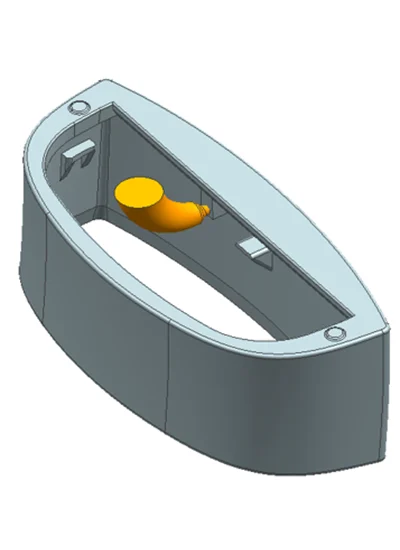
Submarine gates, also known as tunnel gates, are a concealed gating method in plastic injection moulding. They feed molten plastic into the cavity from below the parting line, allowing automatic degating and leaving minimally visible gatemarks. This makes them ideal for high-volume production and cosmetic parts where appearance matters.
What Is a Submarine Gate?
A submarine gate (also called a sub gate or tunnel gate) is a small, angled channel that allows molten plastic to flow from the runner system into the mold cavity below the parting line. It’s designed to automatically shear off during part ejection, leaving a clean finish.
Main functions:
- Concealed injection point for improved aesthetics.
- Automatic removal without secondary trimming.
- Shorter cycle times and efficient automation.
Benefits of Using Submarine Gates in Mould Design
- Automatic Degating – Eliminates manual gate removal.
- Improved Aesthetics – Gate marks hidden on non-visible surfaces.
- Cycle Time Efficiency – Speeds up production.
- Compact Design – Suitable for space-limited gating areas.
- Versatile Applications – Automotive, electronics, medical, and consumer goods.
Four Common Submarine Gate Designs
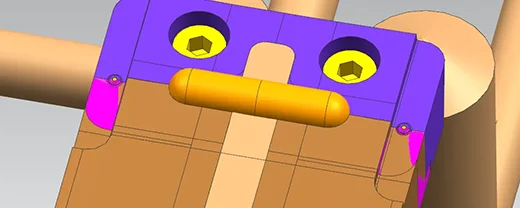
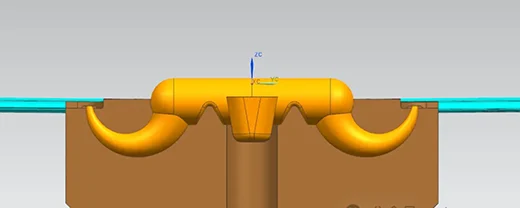
- Symmetrical Submarine Gate on the Cavity Side (Male Mould Side)
Two gates on opposite sides of the part for balanced, symmetrical flow. Helps reduce warpage and improve consistency.
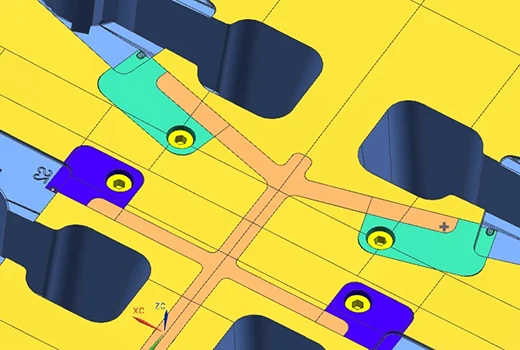
- Single-Sided Submarine Gate on the Cavity Side (Male Mould Side)
A single gate on one side, requiring fewer inserts and reducing tooling cost. Ideal for parts where balanced flow is not critical.
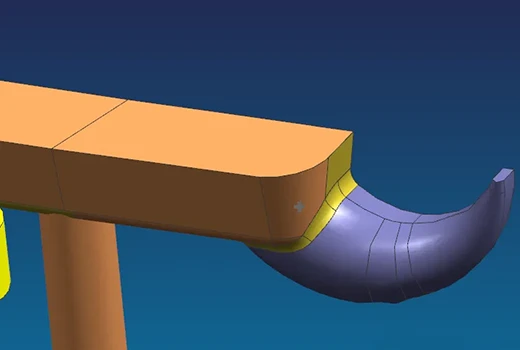
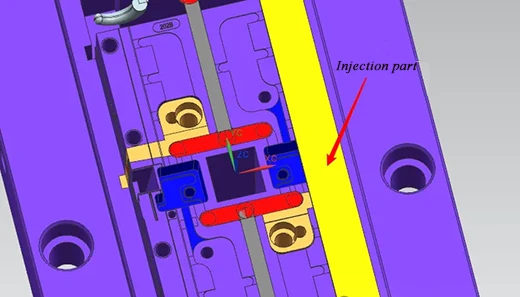
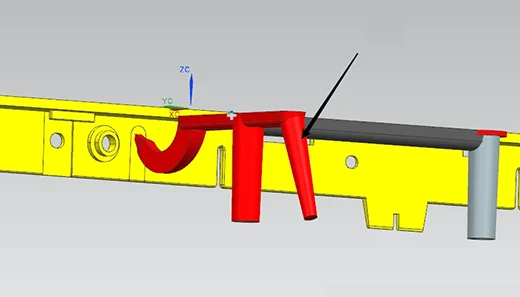
- Submarine Gate for a Single Product with Auxiliary Runner
Includes an auxiliary runner to ensure even filling, especially useful in multi-cavity tools or isolated part designs.
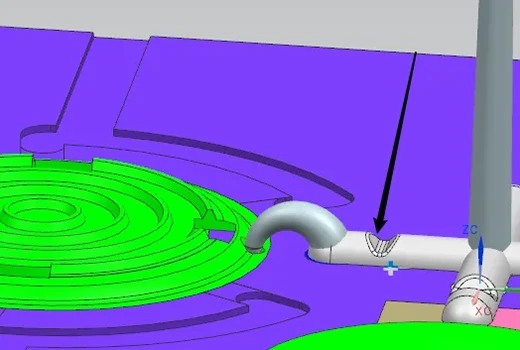
- Submarine Gate on the Core Side (Female Mould Side)
Placed on the core side to suit deep cavities, tall parts, or ejection-specific designs.
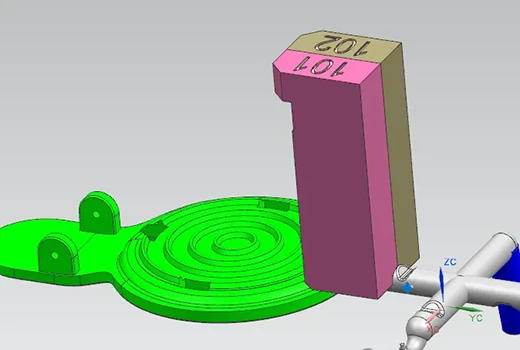
Key Design Parameters and Best Practices
- Gate Relief:

0.3–0.5 mm sub gate relief ensures easy plastic flow and clean automatic degating. - 0.3–0.5 mm relief, with one side increased by 0.5–1 mm.
- 30° taper for smooth flow and easy break-off.
- Gate Diameter:
- 60–70% of part wall thickness, adjusted for material and geometry.
- Positioning:
- Maintain core insert strength.
- Keep ≥ 3.0 mm runner edge clearance for deep cavities; ≥ 1.5 mm for flat parts.
- Distance from Part Edge:
- ≥ 3.0 mm to prevent breakage or sticking.
- Gate Radius:
- R5 mm or more for clean separation.
- Gate Base Relief:
- Apply a 30° taper on the appropriate mould side.
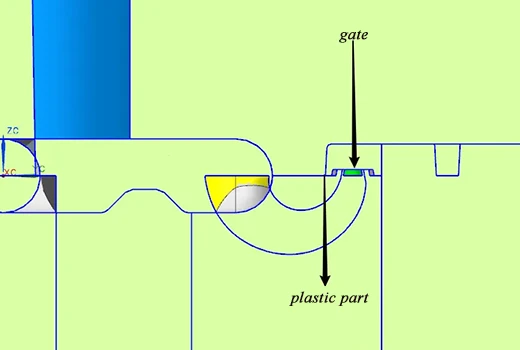
Types of Submarine Gates by Geometry and Location
- Standard Submarine Gate (Side Tunnel Gate)
Straight tunnel entry from the side, below the parting line.
Easy to machine and widely used.
Applications: General plastic parts, electronics housings, automotive interiors. - Banana Gate (Banana-Shaped Tunnel Gate)
Curved entry from behind, avoiding the parting line for invisible gate marks.
Applications: Cosmetic panels, appliance fronts, consumer goods. - Core Side Submarine Gate
Positioned on the female mould side for deep or complex shapes.
Applications: Tall vertical parts, deep-drawn components. - Submarine Gate with Auxiliary Runner
Includes a short runner leading to the gate, ensuring balanced flow.
Applications: Multi-cavity moulds, asymmetrical parts, inserts.
Applications
- Consumer Products:
Remote control covers, appliance housings, cosmetic packaging. - Automotive:
Interior panels, buttons, clips, decorative trims. - Medical Devices:
Syringes, housings, diagnostic kit components. - Electronics:
Enclosures, switches, connectors. - Toys and Precision Parts:
Components with fine appearance and minimal gate vestige.

 Designs in Plastic Injection Mould)