


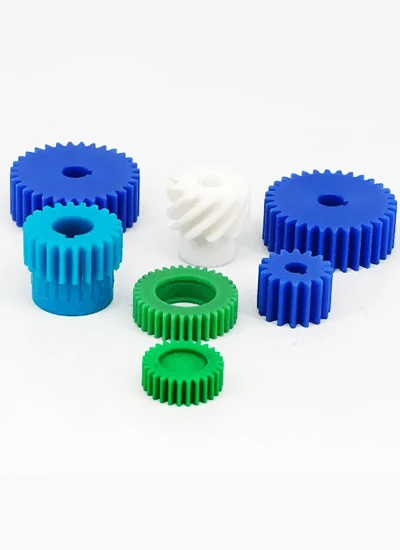
Polyoxymethylene (POM), widely known as acetal, is a high-performance engineering thermoplastic used for precision components that require outstanding dimensional stability, low friction, and strong mechanical performance. Its semi-crystalline molecular structure provides excellent rigidity, hardness, wear resistance, and fatigue strength, making it a preferred material in automotive, industrial, consumer, and food-processing applications.
What Is POM Plastic?
POM is available in two primary forms: POM-H (homopolymer) and POM-C (copolymer). Both grades share core characteristics—low moisture absorption, excellent machinability, and superior wear properties—but differ in crystallinity, chemical resistance, and heat tolerance.
Key Characteristics of Polyoxymethylene (Acetal)
- High stiffness, strength, and fatigue resistance
- Excellent sliding and wear behavior
- Low friction coefficient and low water absorption (~0.8% saturation)
- High dimensional stability and good machinability
- Good hydrolysis resistance up to ~60°C; limited resistance to strong chlorine/alkali
POM-H vs. POM-C Overview
POM-H (Homopolymer) — higher crystallinity, greater rigidity and fatigue resistance. Commonly available under brand names such as Delrin®.
POM-C (Copolymer) — better chemical resistance and reduced sensitivity to hot chlorinated cleaning agents; often the preferred choice in demanding chemical or food-processing environments.
POM Material Grades and Product Forms
POM is manufactured into a wide range of product types:
- POM rods, tubes, plates, and sheets
- POM compounds and modified grades (glass-filled, lubricated, antistatic, conductive, detectable)
- Injection-molded components and precision-machined parts
- Acetal filaments for specialized additive manufacturing
Many manufacturers supply POM under trade names such as TECAFORM and Delrin®.
Important Properties of POM Plastic
Core properties:
- High strength, stiffness and toughness; retains rigidity down to −40°C
- Excellent sliding and wear resistance; low coefficient of friction
- Low moisture uptake enabling tight tolerances and precise machining
- Good creep resistance and elastic recovery
- Good electrical insulation characteristics
Mechanical Properties
POM exhibits high tensile strength, high fatigue endurance, and good impact performance (especially at low temperatures). It is frequently chosen where long service life under cyclic loads is required.
Thermal and Chemical Resistance
POM-H typically has a higher melting point and slightly better heat resistance. POM-C offers improved chemical resistance — particularly where chlorinated cleaners are used. POM is generally hydrolysis-resistant up to ~60°C.
Comparison Table — POM-H vs. POM-C vs. PA6 vs. PA66
| Property / Material | POM-H (Homopolymer) | POM-C (Copolymer) | PA6 (Nylon 6) | PA66 (Nylon 66) |
|---|---|---|---|---|
| Chemical Name | Polyoxymethylene Homopolymer | Polyoxymethylene Copolymer | Polyamide 6 | Polyamide 66 |
| Key Features | Highest rigidity & fatigue resistance | Better chemical resistance, stable in hot water | Tough, impact-resistant; moisture sensitive | Higher stiffness & heat resistance vs PA6 |
| Density (g/cm³) | ~1.42 | ~1.41 | ~1.13–1.15 | ~1.14–1.15 |
| Tensile Strength (MPa) | 65–75 | 60–70 | 60–70 | 75–85 |
| Elongation at Break | Low–moderate | Moderate | High | Moderate |
| Melting Point (°C) | ~175–180 | ~162–168 | ~215 | ~255 |
| Water Absorption (Saturation) | ~0.8% | ~0.8% | 7–9% | 7–9% |
| Dimensional Stability | Excellent | Excellent | Moderate–poor (moisture effect) | Better than PA6, but moisture-sensitive |
| Wear & Sliding Properties | Excellent | Excellent | Very good | Very good |
| Chemical Resistance | Limited vs. strong chemicals | Better (preferred for chlorinated cleaners) | Good, but sensitive to strong acids | Good |
| Machinability | Excellent | Excellent | Moderate | Moderate |
| Typical Applications | Precision gears, bushings, sliding parts | Food equipment, chemical-contact parts | Consumer goods, housings, general engineering | Automotive, structural, high-load components |
Applications of POM Plastic
POM is relied upon in industries that demand precision, stability, and repeatable performance:
Automotive Applications
- Door systems
- Fuel system components
- Sensor housings
- Actuator gears
Industrial Machinery
- Bearings, bushings, and pulleys
- Conveyor components
- Guide rails and wear strips
- Sliding parts
Consumer & Electronics
- Zippers, clips, latches
- Office machine components
- High-gloss visible parts
Food, Pharmaceutical & Water Systems
- Pump components
- Valves and dosing mechanisms
- Food-grade sliding parts
- Components requiring low friction and hygiene compliance

: Properties, Grades, Applications)