


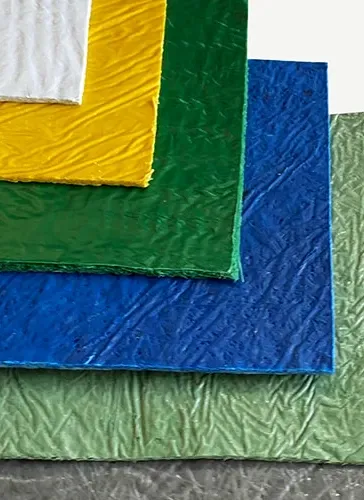
What Is Sheet Molding Compound (SMC)?
Sheet Molding Compound (SMC) is a high-performance composite material widely used in automotive, industrial, and specialty manufacturing. It combines polyester resin with long glass or carbon fibers, along with fillers and additives, to create a material that delivers superior strength, durability, and design flexibility.
SMC is prized for its strength-to-weight ratio, chemical resistance, and ability to form complex shapes — makin—making for high-volume manufacturing of lightweight, durable parts.
Understanding Sheet Molding Compound
Composition of Sheet Moulding Compound (SMC)
Sheet Moulding Compound (SMC) is a high-performance thermosetting composite material designed for strength, durability, and precision. It is primarily composed of a resin matrix, reinforcing glass fibres, inert fillers, and a range of functional additives that together create a material ideal for complex moulded components.
1. Resin Matrix
The resin matrix, typically an unsaturated polyester resin, acts as the binder that holds all other components together.
It provides structural cohesion, heat resistance and chemical stability, forming the foundation of SMC’s mechanical performance.
2. Fibre Reinforcement
Chopped glass fibres, or in some cases carbon fibres, are dispersed within the resin to deliver high tensile strength, impact resistance, and dimensional stiffness.
These fibres significantly improve the composite’s load-bearing capacity and rigidity, making SMC suitable for demanding industrial and automotive applications.
3. Inert Fillers
Fillers such as calcium carbonate, talc, or wollastonite are incorporated to enhance material stability and surface finish while reducing production costs. They also help to control viscosity during processing and ensure a smoother surface on the finished part.
4. Additives
Fillers such as calcium carbonate, talc, or wollastonite are incorporated to enhance material stability and surface finish while reducing production costs.
They also help to control viscosity during processing and ensure a smoother surface on the finished part.
- Catalysts: accelerate curing and ensure complete polymerisation.
- Pigments: provide consistent, durable colour.
- Thickeners: adjust resin viscosity for optimal flow.
- Release agents: aid demoulding without surface damage.
- Stabilisers: e.g. UV stabilisers to improve weather resistance and longevity.
Material integration
These ingredients are combined into ready-to-mould sheets with uniform fibre distribution and resin impregnation.
The sheets are then compression-moulded to produce precise, durable components suitable for high-volume production.
SMC Manufacturing Process Explained
The manufacturing of Sheet Molding Compound (SMC) follows a precise, multi-step process designed to ensure
consistency, strength, and high-quality surface finishes. This controlled production method allows manufacturers
to achieve uniform results even in high-volume production while minimizing material waste.
- Fiber and Resin Mixing — Long strands of glass or carbon fiber are thoroughly mixed with a polyester resin base and various additives. This combination determines the mechanical and thermal properties of the final composite.
- Sheet Formation — The blended material is evenly spread between two layers of protective polymer film to form sheets of the required thickness. These layers help preserve material integrity during handling and storage.
- Curing by Compression Molding — The prepared sheets, known as “charges,” are cut to size and placed into heated molds. Under high pressure, the material cures and solidifies into strong, dimensionally stable components.
This streamlined process enables manufacturers to produce parts with exceptional uniformity, durability, and precision — ideal for industries demanding high performance and minimal variation.
Detailed Key Steps
- Fiber Preparation — Long fibers (typically longer than 1 inch) are spread in a resin bath containing polyester, vinyl ester, or epoxy resin. Proper fiber wetting is crucial for ensuring strength and adhesion.
- Layering and Compaction — The fiber-resin mixture is layered between polymer films, then compacted to achieve a uniform thickness and remove trapped air. This step ensures even distribution of fibers throughout the sheet.
- Aging — The formed SMC sheets are stored under carefully controlled temperature and humidity conditions. During this “maturation” phase, the resin partially cures and the material stabilizes, reaching an optimal viscosity for molding.
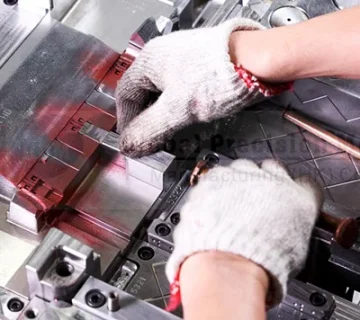
- Compression Molding — Once matured, SMC sheets are cut into specific shapes and loaded into heated steel molds. Under pressures reaching up to 2,000 PSI, the material flows to fill the cavity and cures into a rigid, precisely formed part with excellent dimensional accuracy and surface finish.
By following these stages, SMC manufacturers can produce components of varying thicknesses, sizes, and complexities—all with consistent structural integrity and a smooth, high-quality finish.
Advantages of SMC
SMC offers several benefits over other materials:
- High Strength-to-Weight Ratio — excellent performance without heavy weight.
- Durability — resistant to impact, corrosion, and chemicals.
- Design Flexibility — capable of producing complex shapes and large parts.
- Cost Efficiency — reduced production waste and efficient molding process lower costs in high-volume manufacturing.
Applications of Sheet Molding Compound
SMC is widely used across industries because it offers an excellent balance of strength, corrosion resistance, design versatility, and cost efficiency. Its ability to mould large, complex shapes quickly makes it ideal for high-volume production, particularly in the automotive, electrical, commercial vehicle, and aerospace industries.
| Industry | Typical SMC Applications | Benefits of Using SMC |
|---|---|---|
| Automotive | – Bumpers- Fenders- Hoods- Roof panels- Door panels- Interior trim panels | – High strength-to-weight ratio- Corrosion resistance- Excellent surface finish- Complex shapes in a single molding process- Dimensional stability |
| Electrical Equipment | – Switchgear cabinets- Motor housings- Junction boxes- Outdoor electrical control panels | – Excellent electrical insulation- Fire resistance- Weather and corrosion resistance- Dimensional stability |
| Industrial Machinery | – Equipment housings- Pump/compressor covers- Control cabinets- Machinery covers | – Chemical resistance- High impact resistance- Corrosion resistance- Dimensional stability- Long lifespan |
| Truck & Commercial Vehicles | – Roof panels- Exterior body panels- Side panels- Hood assemblies- Air deflectors and spoilers | – Lower weight improves fuel efficiency- Corrosion resistance- Durable under harsh conditions- Large part molding capability |
| Sporting Goods | – Kayaks and canoes- Snowmobile and ATV panels- Bicycle frames- Helmets- Protective gear | – Lightweight yet strong- Good impact resistance- Ability to produce complex shapes- Corrosion resistance- Excellent surface finish |
| Aerospace | – Interior panels- Cowls and engine covers- Fairings and structural panels- Equipment housings | – Weight reduction for fuel efficiency- High strength and dimensional stability- Fire resistance- Excellent corrosion resistance |
| Marine | – Boat hulls- Deck panels- Marine equipment housings | – Corrosion resistance against saltwater- High impact strength- Lightweight for better performance |
| Construction | – Architectural panels- Electrical enclosures- Decorative facades | – Weather and corrosion resistance- Ability to produce large panels- Good dimensional stability |
| Electrical Transport | – Bus panels- Rail interior panels | – Fire resistance- Lightweight structure- Strong and durable |
SMC vs. Fiberglass
| Feature | SMC | Fiberglass |
|---|---|---|
| Strength | Higher strength under stress | Good but less impact resistance |
| Weight | Lightweight yet rigid | Lighter but more flexible |
| Cost | Cost-effective for high volume | Lower initial cost but higher labor costs |
| Durability | Excellent chemical and impact resistance | Good but less suitable for high-stress environments |
FRP vs SMC Comparison Chart
Difference Between Fiber Reinforced Plastics (FRP) and Sheet Moulded Composite (SMC)
SMC is essentially a specialised subset of FRP optimised for high-volume production of large, complex components with good surface finish and strong corrosion resistance.
| Aspect | Fiber Reinforced Plastics (FRP) | Sheet Moulded Composite (SMC) |
|---|---|---|
| Definition | A broad class of composite materials made of reinforcing fibres embedded in a polymer resin matrix. | A specific type of FRP made from resin-impregnated sheets containing short-cut glass fibres, fillers, and additives, processed by compression moulding. |
| Composition | Resin (polyester, vinyl ester, epoxy, etc.) + fibres (glass, carbon, aramid) + fillers/additives. Fibre length can vary (short, long, or continuous). | Unsaturated polyester resin + chopped glass fibres (1/4″–1″) + fillers + additives. Fibres are short and evenly distributed. |
| Manufacturing Process | Multiple processes: hand lay-up, spray-up, vacuum bagging, filament winding, pultrusion, resin transfer moulding. | Compression moulding: prepared sheets are cut, placed in a heated mould, and pressed under high pressure to form the part. |
| Strength | Very high strength, particularly with continuous fibres. | Good strength for many applications, though generally less than continuous fibre FRP. |
| Surface Quality | Varies by process; may require additional finishing. | Smooth, consistent surface finish suitable for visible parts with minimal finishing. |
| Forming Capability | Highly flexible; suitable for complex shapes of almost any size. | Suitable for large, intricate shapes; highly efficient for standardised high-volume production. |
| Cost | Variable; continuous fibre FRP is generally more expensive. | Cost-effective for medium to high-volume production with consistent quality. |
| Weight | Extremely lightweight with high performance potential. | Lightweight, though slightly heavier than continuous fibre FRP. |
| Applications | Marine hulls, wind turbine blades, aerospace structures, sporting goods, architectural structures. | Automotive body panels (bumpers, hoods, roofs, fenders), electrical housings, industrial housings, truck panels, bus panels, public transport components. |
| Advantages | High strength, flexibility, wide design possibilities, suitable for custom applications. | High production efficiency, excellent surface finish, corrosion resistance, high dimensional stability, good for complex shapes. |
| Limitations | Surface finish may require post-processing; variable production efficiency. | Fibre length limits maximum strength; tooling costs are higher for low-volume production. |
Repairing SMC Components
Damage to SMC parts, such as cracking or fractures, can be repaired using adhesives specially formulated for composite materials. Repairs often involve:
- Removing loose or damaged fibers.
- Applying a compatible adhesive or patch material.
- Sanding and refinishing for a smooth surface.
Proper repair extends component life and maintains structural integrity.
TECHNICAL QUESTIONS
Frequently Asked Questions About Sheet Molding Compound
Sheet Molding Compound (SMC) is a high-strength composite material made of polyester resin, fiberglass, fillers, and additives, used in automotive, industrial, and specialty manufacturing
SMC (Sheet Molding Compound) is used to produce lightweight, strong, and durable parts for a variety of industries, including automotive, industrial, electrical, marine, and specialty manufacturing.
SMC fiberglass is a strong composite of glass fibers and polymer resin, used in aerospace, automotive, electrical housings, and high-performance parts.
SMC is used for machine housings, electrical switchgear enclosures, pump and valve components, transformer casings, and equipment panels.
The SMC manufacturing process forms high-strength composites by preparing resin, fabricating sheets, and curing under heat and pressure.
Yes — medical equipment housings, sanitary fixtures, appliance panels, and aerospace interior components benefit from SMC’s strength, finish quality, and design flexibility.

? | SMC Product Design)