

2K Injection Moulding: Comprehensive Overview
Injection moulding is a highly efficient method for producing plastic parts and components. It is highly regarded for its efficiency, versatility, and capability to create complex components with enhanced functionality and aesthetics. Several industries employ it, including medical, automotive, electronics, and consumer products.
What is 2K Moulding?
Two-shot moulding, commonly known as 2K injection moulding, uses two distinct materials in one mould to make one item. This procedure cuts expenses by eliminating the requirement for painting and post-moulding work while maintaining the quality and uniformity of the output. The first substance is usually a rigid plastic, like polypropylene, while the second is an elastomer, like TPE or TPV. This procedure cuts expenses by eliminating post-moulding steps and ensuring that the quality of the product stays the same.
Common Applications
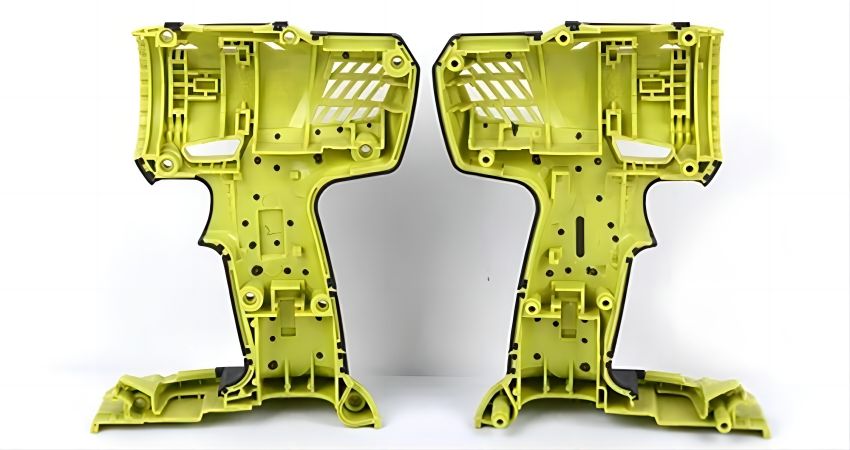
Two-shot moulding is versatile and suitable for creating intricate parts with various features. Its most common applications include:
- Medical Industry:
-
- Syringe Plungers: Produces plungers with soft, flexible tips.
- Inhalers: Creates inhalers with tight-fitting, flexible seals.
- Contact Lens Cases: Produces cases with soft, flexible lids.
- Medical Tubing: Generates tubing with soft, flexible ends.
- Surgical Instruments: Manufactures precise instruments like forceps and clamps.
- Other Industries:
-
- Automotive: Interior components, seals.
- Consumer Electronics: Keypads, protective covers.
- Household Appliances: Handles, seals.
- Packaging: Caps, closures.
- Sports Equipment and Toys: Grips, protective elements.
How Does 2K Injection Molding Work?
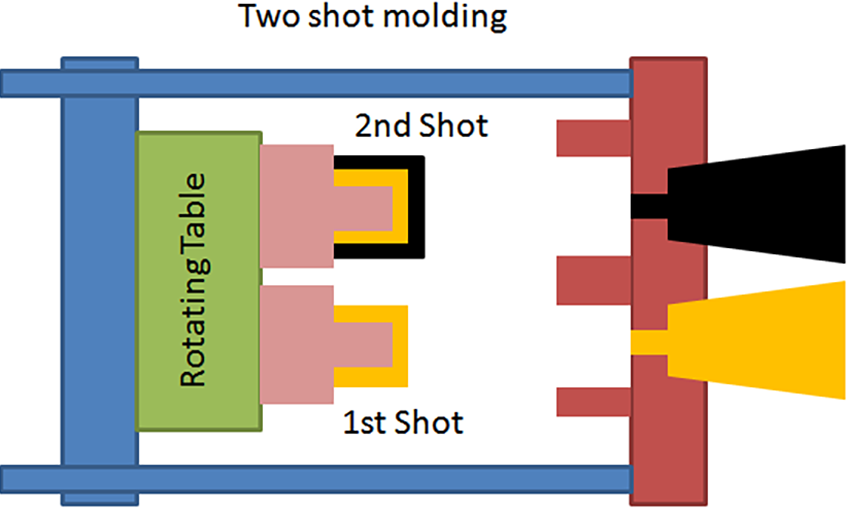
The 2k molding process involves injecting two materials into a mould in a specific sequence. First, a rigid thermoplastic is injected to create the initial part. The mould then rotates to a second station, where a second, softer material is injected into specific areas of the first shot. This method allows for various effects, such as adding different colours, textures, or functional elements like soft-touch grips or structural supports.
Benefits of Two-Shot Moulding
- Versatility: Produces complex, multi-material parts in a single cycle.
- High Precision: Achieves tight tolerances for intricate geometries.
- Enhanced Functionality: Combines materials for improved performance.
- Improved Aesthetics: Integrates multiple colors and textures.
- Reduced Assembly Time: Eliminates the need for separate assembly operations.
- Lower Waste: Minimizes material usage and environmental impact.
Challenges
- High Initial Investment: Equipment costs are higher than traditional injection moulding.
- Complex Process: Requires specialized knowledge and experience.
- Longer Cycle Times: Typically longer than traditional moulding processes.
- Limited Material Selection: Some material combinations may not be compatible.
- Maintenance Requirements: Regular upkeep is necessary to maintain efficiency.
Requirements for 2K Injection Molding
- Material Requirements: Materials must have compatible melt temperatures and similar hardness. The choice of materials depends on the final product’s intended use and performance requirements.
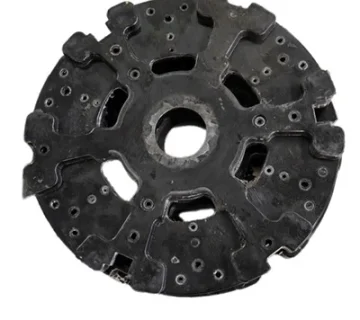
- Process Requirements: Specialized equipment with dual injection units and rotating or sliding moulds. Precise control of injection speed, pressure, and timing is crucial.
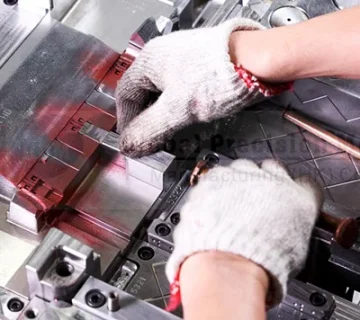
- Mould Requirements: The mould must have two separate cavities and an indexing system to prevent material leakage and ensure proper alignment. Cooling channels are essential for proper solidification.
Design Guidelines
- Material Compatibility: Ensure similar melt temperatures and hardness.
- Part Design: Optimize design to prevent weak points and stress areas.
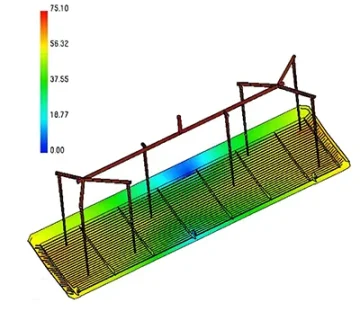
- Gate Location: Strategically place gates for effective material injection.
- Wall Thickness: Maintain uniform wall thickness to avoid stress points.
- Draft Angles: Include draft angles for easy part removal from the mould.
Special Requirements for Medical Applications
For medical devices, materials must be biocompatible, and the manufacturing process must prevent contamination. Cleanroom facilities are often required, and products must meet regulatory standards, such as FDA approval in the United States.
Conclusion
Two-shot moulding is a powerful technique that offers numerous advantages for producing complex, high-quality plastic components. By understanding the process, benefits, challenges, and requirements, manufacturers can effectively leverage this technology to enhance product performance, reduce costs, and streamline production.