

Introduction to Mold Flow Analysis in Injection Molding
Designing high-quality injection molds is a complex task that requires meticulous planning and precision. Traditionally, the process relied heavily on the designer’s experience, often leading to extensive debugging and modifications after the initial design. This approach could result in inefficiencies and production gaps, even with experienced engineers dedicating weeks or months to ensure accuracy.
Advancements in Mold Flow Analysis Technology
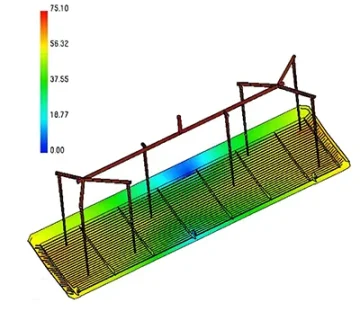
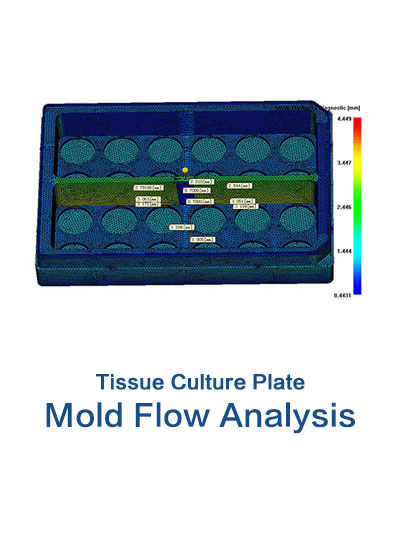
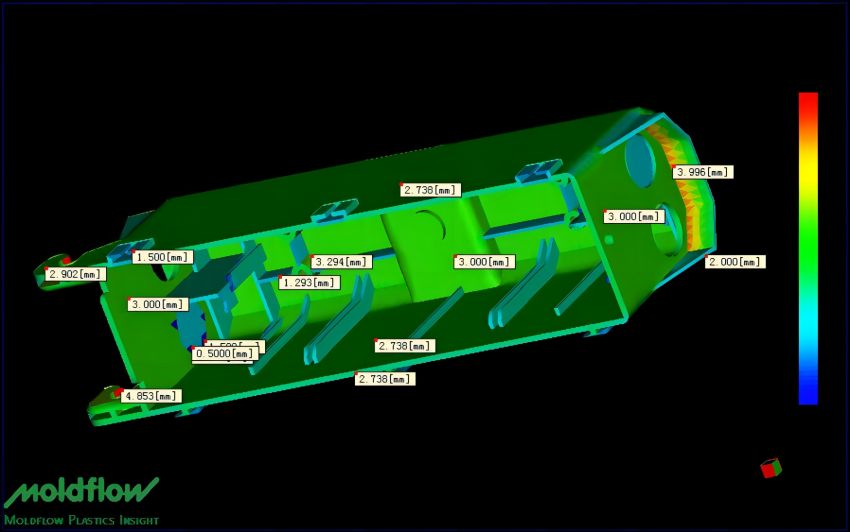
Advancements in mold flow analysis technology have revolutionised the injection molding industry, enabling engineers to identify and address potential issues before physical molds are produced. Modern software tools, particularly Moldflow, play a pivotal role by simulating the complete injection molding process—from material flow and cooling to pressure distribution and potential warpage.
Role of Moldflow Software
By providing detailed visualisations of how molten plastic behaves within a mold, Moldflow allows designers to optimise gate locations, adjust wall thicknesses, and fine-tune process parameters with precision. This proactive approach leads to faster development cycles, fewer trial-and-error iterations, enhanced part quality, reduced defects, and cost savings. Manufacturers achieve consistent performance and reliability, even for complex or high-precision components.
Benefits for Product Design and Production
The ongoing enhancement of professional CAD/CAE/CAM software has strengthened mold flow analysis. It enables preemptive assessment of mold designs, reducing the number of physical trials required and accelerating product development. Moldflow also supports technicians by identifying critical points throughout the process, helping to optimise production efficiency and overall product quality. In summary, Moldflow combines advanced simulation with practical analysis, ensuring that injection-molded products meet high standards of precision, performance, and reliability from design to production.
Practical Application of Moldflow Analysis
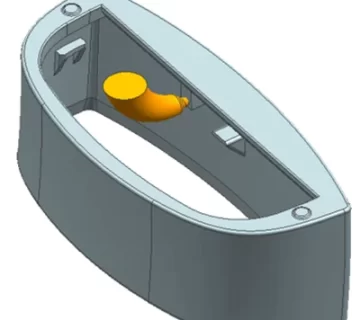
To illustrate the practical application of Moldflow, consider the example of an injection mold part, such as a small plate. Inadequate mold design, improper material selection, or incorrect process parameters can lead to defects like warping, deformation, flash, weld marks, and prolonged molding cycles.
Moldflow software accelerates the mould creation process by analyzing how the material will flow before the mold is made, which helps identify the best gate position for injection-molded parts. Initially, we establish the optimal gate position for injection-molded parts. Subsequent analyses, including filling, holding pressure, and warpage analysis, predict potential quality issues. Finally, we select the best materials for injection-molded parts by examining optimization plans to enhance product quality, production efficiency, and qualification rates.
Mould Flow Analysis — Inspection Criteria
| Description | Image | Standard |
|---|---|---|
| Core / Cavity Wall Temperature Variation | Insert Image | Temperature difference should not exceed 16°C. Excess variation can cause residual stress and product deformation. |
| Core / Cavity Surface Temperature Difference | Insert Image | Temperature differential must not exceed 11°C. Large deviations may cause warpage and longer cycle time. |
| Cooling Time | Insert Image | Product solidification must occur uniformly. Large variations require optimisation of cooling layout or product design. |
| Cooling Water Inlet / Outlet Temp. Difference | Insert Image | Temperature difference should not exceed 3°C. Larger gaps indicate flow direction or circuit design issues. |
Detailed Analysis Process
Model Modeling and Pre-processing
The three-dimensional model of the plastic molded part (dimensions: 140 mm × 85 mm × 3 mm, wall thickness: 1.5 mm) is created using a 3D solid mesh model. The finite element mesh is divided with a global mesh side length of 1.3 mm. A CAD model with 822,409 mesh units is created, diagnosed, and repaired (average aspect ratio: 7.38).
Optimal Gate Location Analysis
The location of the gate significantly influences the flow of melted material in the mold, which subsequently affects the arrangement of polymer molecules and can lead to warping after molding. Selecting the appropriate gate position is crucial. Moldflow’s advanced analysis tools evaluate how smoothly the material flows and balances, identifying the best gate position to maintain a steady flow. This strategic approach minimizes potential issues and enhances the success rates of initial mold trials while reducing product design and launch cycles, lowering production costs, and improving the competitiveness of corporate outcomes.
Analysis Sequence and Process Settings
You can customize the analysis sequence to include options such as filling, holding pressure, warpage, cooling, and more. In this scenario, the analysis examines filling, holding, and warpage, highlighting how the melted material flows, how the holding stage affects the part’s quality, and how warpage takes place. Default process parameters include mold surface temperature, melt temperature, injection pressure, holding pressure, holding time, and cooling time.
Results of Mold Flow Analysis
The analysis results for the small plate include:
- Filling time: 0.8694s
- Flow front temperature: 227~232.7°C
- Pressure during speed and pressure switching: 44.26 MPa
- Volume shrinkage rate: 19.68% (average: 3.103%~18%)
- Warpage deformation: 1.43 mm (warpage deformation: 10.21%)
Issues identified include significant volume shrinkage leading to severe warpage deformation. Optimization efforts should focus on reducing the volume shrinkage rate to minimize warpage deformation.
Optimization Analysis
Material substitution is proposed to enhance product quality. For example, using PS material from INEOS Styrolution (Styrolution PS 1300) can reduce volume shrinkage and warpage deformation. Moldflow optimization analysis showed:
- Volume shrinkage reduction from 19.68% to 7.588%
- Average volume shrinkage reduction from 18% to 6.173%
- Total warpage deformation reduction from 1.43 mm to 0.5787 mm
- Warpage deformation reduction from 10.21% to 4.13%
Conclusion
Moldflow technology significantly aids in designing injection mold parts by predicting quality issues and optimizing design and analysis.
This approach minimizes empirical evaluation errors, reduces development costs and cycles, and enhances product quality.
Quality-Assured Plastic Injection Molding
DSW, established in 1998, is a leading injection molding company serving global clients from China. Our advanced process controls and technologies guarantee high-quality products tailored to exact specifications and delivered punctually.